During the past school year, our high school successfully launched the “Python & Math” project, aimed at introducing coding into mathematics education. The project is being implemented within the framework of international cooperation /the Erasmus+ Programme/.
The main aim of the project is to demonstrate how programming with Python can make mathematics more understandable, practical, and relevant to the interests of today’s students. Instead of perceiving mathematical concepts as abstract formulas, students have the opportunity to explore, model, and apply them by creating their own code.
During the first year of the project, all mathematics teachers at the school participated in training on how to use coding in mathematics lessons. This created the necessary conditions for the sustainable implementation of innovative teaching methods.
Practice shows that the use of Python increases students’ motivation and encourages them to become active participants in the learning process.
The project confirms an important idea – mathematics is not just about calculations; it is a tool for understanding the world. Through Python, students move from passively learning concepts to actively experimenting, reasoning, and discovering solutions. Coding helps them not simply learn mathematics, but actually do mathematics.
As Seth Godin emphasizes in his book Stop Stealing Dreams, the world is changing rapidly under the influence of technology, and education must respond to these changes.
The “Python & Math” project is an example of how schools can successfully connect mathematics with technology.
The project brings together five partner schools from different countries and Bursa Technical University. University lecturers train mathematics teachers to create more motivating and engaging lessons for students through the use of Python.
The project is innovative because there is currently no educational resource at European level that combines mathematics and programming in this way.
Bursa Technical University will investigate how students’ interest in and attitudes towards mathematics change as a result of using coding.
The project is aimed at students who experience difficulties with logical reasoning and critical thinking, as well as students who achieve high results in mathematics but experience stress while working.
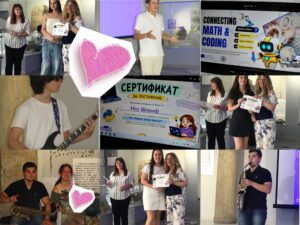
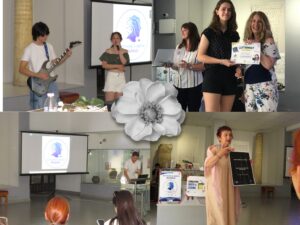
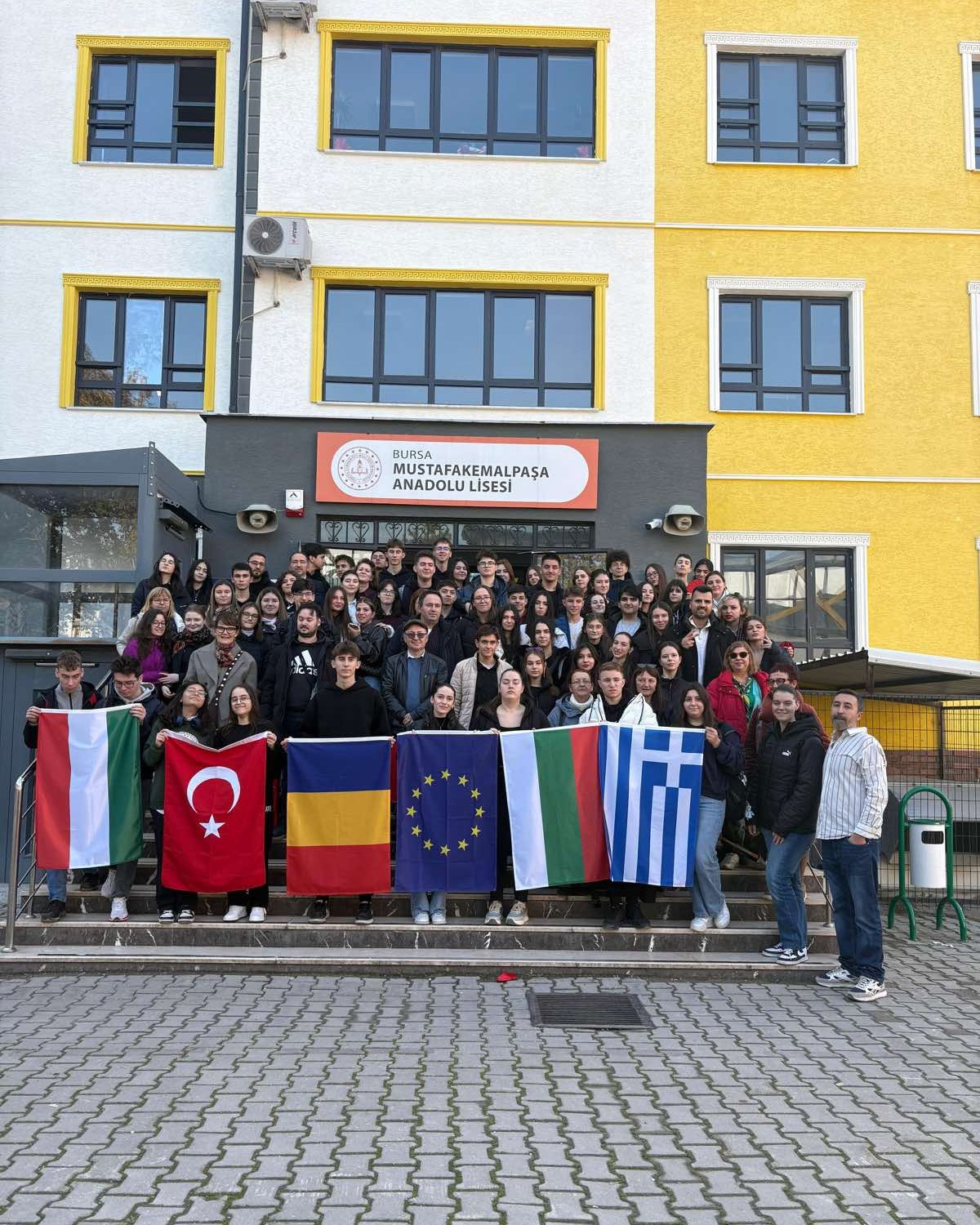
Eighteen students participated in two international project meetings. The first took place at the Turkish partner high school in Mustafa Kemal Paşa, Bursa Province, Türkiye, and the second in Romania, at the partner school National College “Ecaterina Teodoroiu” in Târgu Jiu, Romania. During both meetings, the participants were trained in various aspects of applying programming in mathematics lessons.
 School is not simply a place where educational content is delivered. It is the first environment in which a person learns how to learn – a skill that remains with them throughout their life. Education does not end with the final school bell or with graduation. That is precisely why the role of the school is much greater – it should create curiosity, motivation, and a desire for personal development.
Unfortunately, we are all aware of the declining interest in mathematics. And this is happening despite the enormous opportunities for professional development that mathematics offers. Often, the reason is not mathematics itself, but the way it is taught – in a traditional, theoretical, and sometimes disconnected-from-the-real-world manner.
But times are changing. We live in a digital era in which technology is part of our everyday lives. So why not use this as an advantage?
This very idea gave rise to the PyMath project. Its goal is to combine mathematics with coding and make lessons more practical, interactive, and engaging. Instead of students asking themselves, “What do I need this for?”, we want them to discover for themselves how their knowledge can be applied.
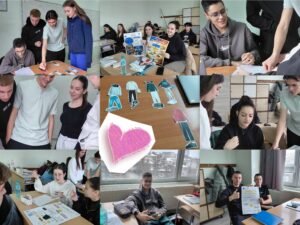
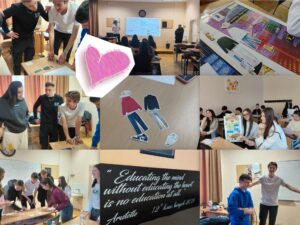
To demonstrate this approach to learning, we conducted a special lesson in which we explained algorithms through a game based on contemporary interests and trends. The students created outfits using algorithms – a step-by-step logical sequence of actions. In this way, they did not simply hear what an algorithm is; they experienced it, applied it, and understood its meaning.
Our goal is not simply to make one lesson interesting. Through PyMath and interactive lessons, we want to inspire students to learn, develop their skills, and discover the meaning and value of knowledge in real life. When students are motivated and actively engaged in learning, this not only makes the learning process enjoyable, but also lays the foundation for future success – at school, in their careers, and in their personal development. Learning is not simply about tasks and formulas written on the board; it is a tool that helps us think, create, solve real-world problems, and achieve our goals.
When a student discovers meaning, knowledge is no longer just a lesson – it becomes inspiration and a path towards their dreams.
The project will continue during the next school year with further training for teachers and students, as well as participation in a project meeting at the partner school in Hungary. In April, our high school will host and organise a project meeting.